Pet accidents are part of life for many homeowners, but deciding whether to replace carpet or invest in odor remediation can be confusing. The right choice depends on how long the contamination has been present, whether urine soaked the pad or subfloor, the type of carpet and padding, and whether repeated cleanings have failed. Understanding the difference between surface odors and deep contamination helps you choose a cost-effective, lasting solution.
How pet odors develop
Pet urine contains organic compounds that break down and produce ammonia and other odor-causing molecules. Over time, urine can migrate from the carpet face fibers into the backing, carpet pad, and even the subfloor. When those reservoirs remain, odors can return after surface cleaning. “Pet urine crystals” and residual proteins can also re-form odors when exposed to moisture or heat.
When treating odors makes sense
- Recent accidents: If the pet accident is fresh and caught quickly, spot treatment with enzymatic cleaners and a professional hot-water extraction can remove stain and odor.
- Surface contamination: Odors confined to the carpet fibers are often removed by truck-mounted steam cleaning, professional stain extraction, and odor neutralizers.
- Single incident with no padding saturation: If the pad and subfloor are dry, a thorough cleaning plus an enzymatic odor eliminator will often restore the area.
- High-quality carpet and low wear: For quality carpets in upper-end homes, professional cleaning preserves appearance and value without immediate replacement.
When replacement is the best option
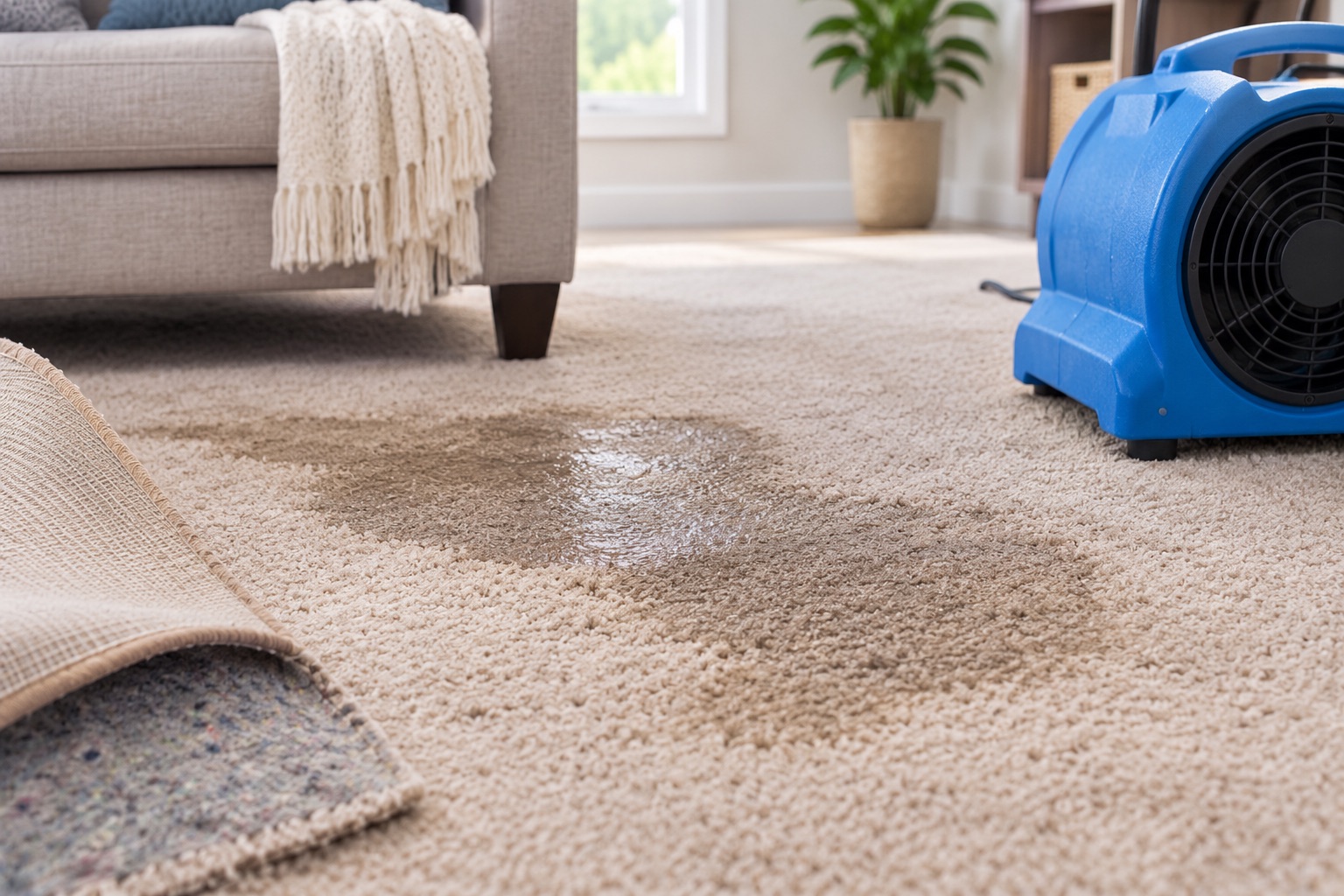
- Saturated padding or subfloor: If urine soaked through to the pad or subfloor, odors are likely embedded in materials below the carpet. Replacing the pad (and possibly the subfloor) is often required to fully eliminate odor.
- Persistent odors after multiple treatments: Recurring smell despite professional cleaning signals deep contamination or chemical changes that cleaning alone can’t reverse.
- Permanent staining or fiber damage: Discoloration, resin breakdown, or textile deterioration from repeated accidents may require replacement for aesthetic or hygiene reasons.
- Mold or bacterial growth: Moisture trapped in padding or subfloor can lead to mold; addressing mold usually requires removal and replacement of affected materials.
Common remediation steps professionals use
Reputable cleaners follow a logical process to diagnose and treat pet odors:
- Inspection and moisture testing to locate the extent of contamination.
- Spot cleaning and enzymatic treatments that digest urine proteins and neutralize odors.
- Hot-water extraction (steam cleaning) with truck-mounted equipment to remove solids, salts, and residue from fibers and backing.
- Deodorizing agents and oxidizers designed for pet odor remediation when appropriate.
- Pad and subfloor removal if tests show saturation or if odors persist.
- Post-remediation testing and walkthrough to confirm odor removal and customer satisfaction.
Costs and value considerations
Professional odor treatment is usually far less expensive than full replacement and can extend the life of your carpet. However, the cost-benefit shifts if padding and subfloor replacement is needed. Consider long-term results—proper remediation can protect indoor air quality, reduce recontamination, and maintain home value.
Questions to ask your carpet cleaner
- Do you perform moisture and contamination testing before recommending replacement?
- Are you IICRC-certified and experienced in pet stain and odor removal?
- Do you provide clear, no-haggle pricing and a satisfaction guarantee?
- Who will perform the work—do you do the job yourself or send technicians?
Preventing future problems
Routine maintenance reduces the chance of permanent damage. Recommendations include prompt spot treatment, regular professional carpet cleaning (the National Rug Institute suggests at least yearly and more often with pets), area rugs in high-risk zones, and training pets to minimize indoor accidents. Using enzymatic cleaners right after an accident and avoiding harsh chemicals that can set urine are also important.
Local expertise matters
Choosing a local provider who understands Treasure Valley homes—especially in Meridian, Star, and Eagle—can make a difference. Kung Fu Carpets & Cleaning Co. emphasizes quality over speed, clear communication, and satisfaction guaranteed. Owner-operated service means James Barnes personally performs work to ensure consistent, top-notch results. That hands-on approach often identifies hidden problems, recommends realistic remedies, and avoids unnecessary replacements.
Conclusion
In many cases, pet odors can be treated effectively without replacing carpet. Surface contamination, fresh accidents, and quality carpets often respond well to professional enzymatic treatments and hot-water extraction. Replacement becomes necessary when padding or subfloor are saturated, odors persist after multiple professional treatments, or the carpet fibers are permanently damaged. A careful inspection and honest recommendation from a local, experienced provider will help you weigh costs and preservation of your home’s appearance and indoor air quality.
If you are facing pet odors or stains in Meridian, Star, Eagle, or the Treasure Valley, contact Kung Fu Carpets & Cleaning Co. for a clear assessment, no-haggle pricing, and a satisfaction-guaranteed solution. Call us today to schedule an inspection and get a professional recommendation tailored to your home.